Windbreaks for Compound Agriculture in Santo Antão
In Santo Antão, Cape Verde, farmers are combating harsh sea winds and water scarcity by adopting community-managed windbreaks with multifunctional trees and shrubs, improving crop yields and livelihoods.
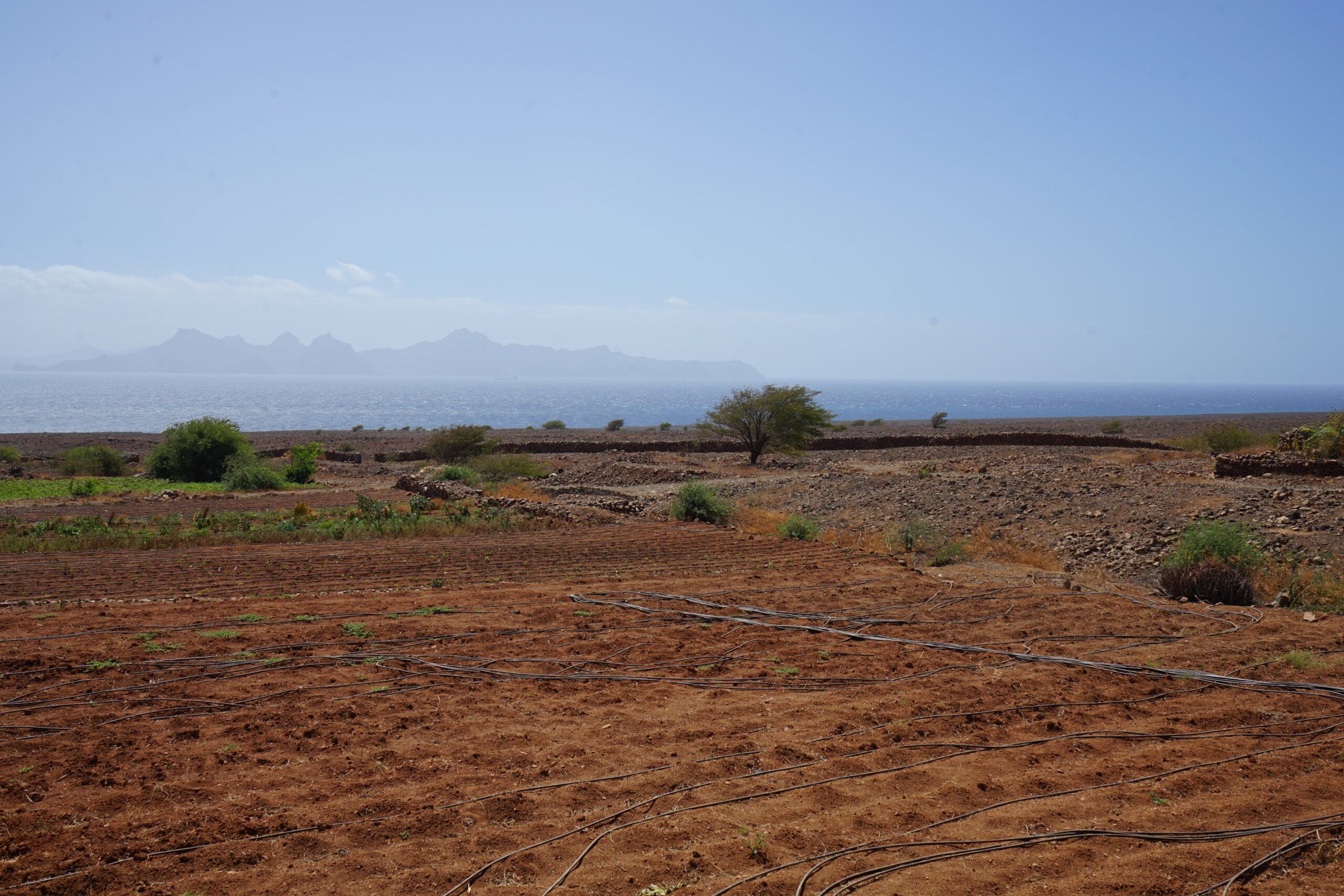
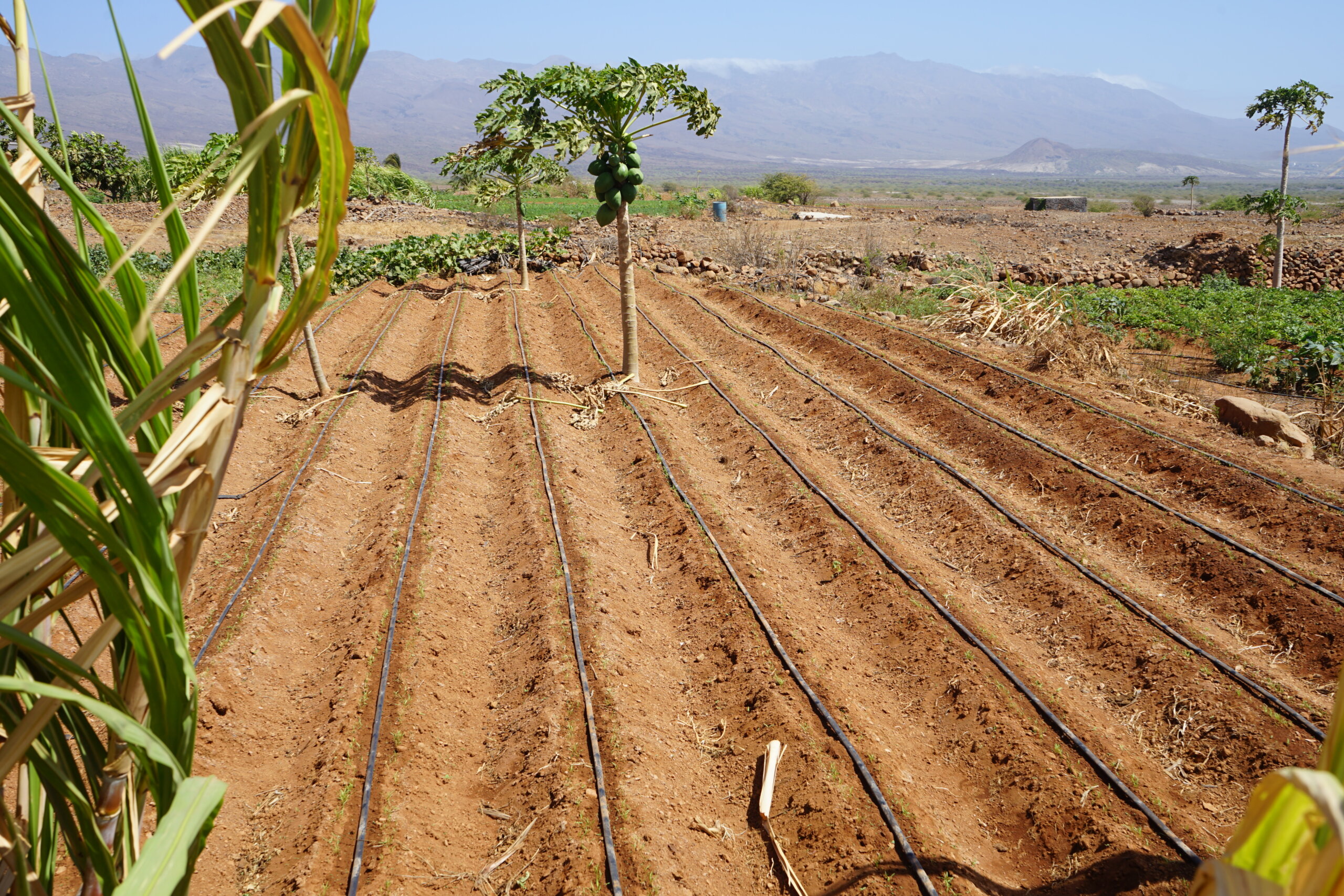
In Santo Antão, Cape Verde’s westernmost island, traditional agriculture was mainly focused on growing rainfed crops, such as maize and perennial beans, in any small plot of arable land available in the mountainous landscape. Progressively, small scale irrigation, based on cisterns and gravity fed drip systems, became more widespread, allowing different crops to grow during the dry season, and contributing to local markets and family livelihoods. However, farmers still face challenges related to the limited availability of water for crops, aggravated by the constant influence of strong sea winds that carry salt water and increase soil evaporation, decreasing the productivity of farms and limiting income generation.
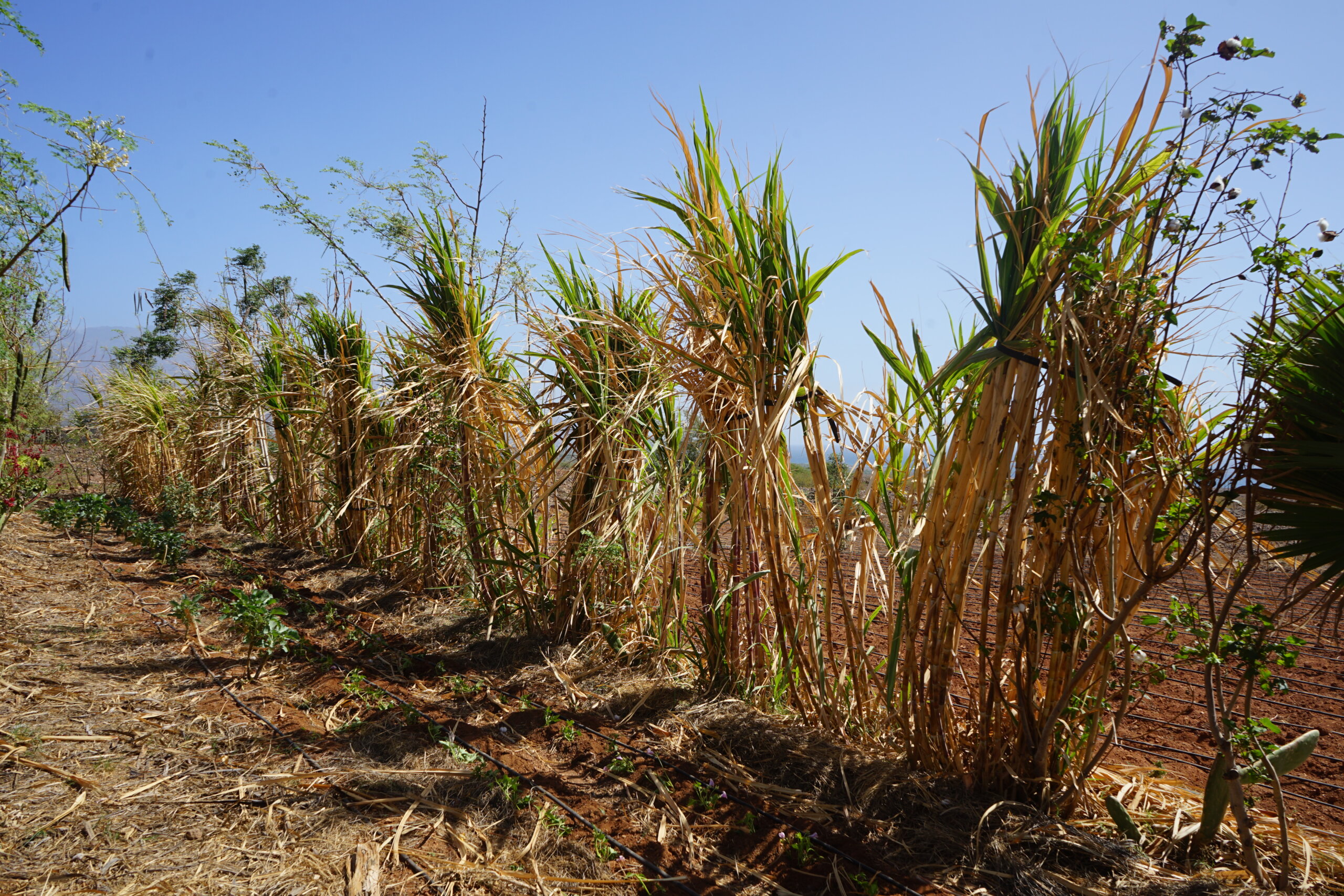
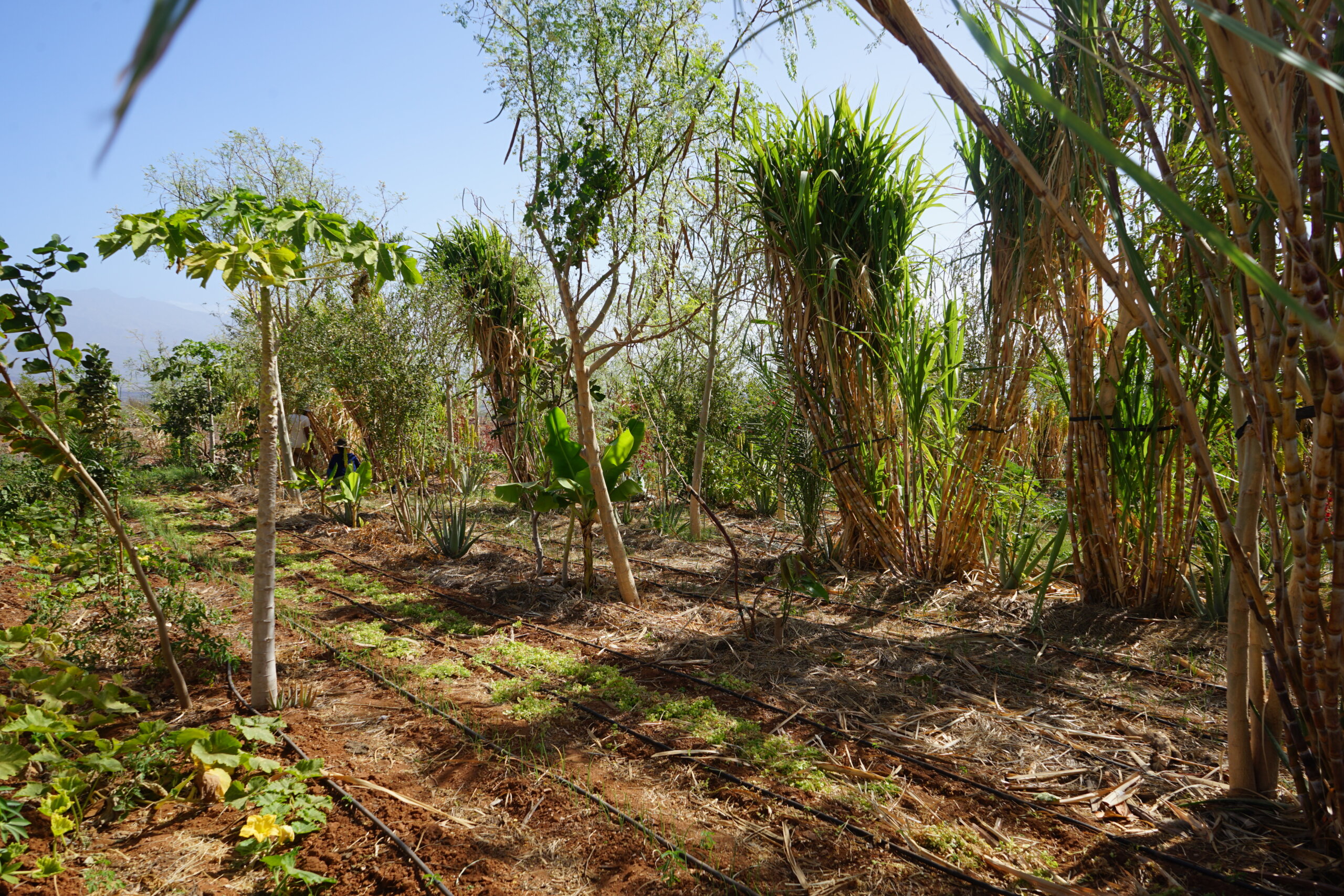
To tackle this environmental constraint, a farmer association from Porto Novo has been testing the effects of windbreaks in horticultural production, particularly multifunctional tree and shrub combinations that mitigate the effects of sea winds and provide shade to crops, fodder for animals and wood for fuel and chipping in situ. These windbreaks consist of single row plantations with fast growing species of shrubs and grasses (Sugarcane, Cassava, Prickly Pear and Hibiscus) for short term effects, alternating with Moringa oleifera and Leucaena leucocephala seeds, and Coco nucifera saplings, to build a taller, perennial layer.
The success of the first experiment motivated farmers to expand the technique to the limits of the whole compound farming area, creating a community managed windbreak that will benefit all farmers working the plots.
Sugar cane is used in the borders for wind protection.
Sugar cane is used in the borders for wind protection. The sugar cane residue from the site is reused by farmers for several purposes.
General view of the agroecological experimental field in Casa do Meio, Santo Antão, Cape Verde, on 26 February 2024.
General view of the agroecological experimental field in Casa do Meio, Santo Antão, Cape Verde, on 26 February 2024.
Share this news article
We use cookies to better understand how our users navigate through our website. Is this okay?
You can revoke your consent any time using the revoke consent button.